Is the AI bubble really poised to burst?
Critics point to the astronomical investments from giants like Microsoft and Meta that have yet to deliver the massive, industry-wide ROI many anticipated.
This has led to a simmering question: is the AI boom built on solid ground, or is it just speculative hype?
But let’s pose a more critical question: even if corporate enthusiasm wanes and investments slow, does that mean AI will simply vanish?
The unequivocal answer is no.
The genie is out of the bottle. The underlying models and technologies are already in the wild, integrated into our tools.
A slowdown in venture funding wouldn’t erase the fundamental capabilities AI now provides and will continue providing.
Let’s be honest, we are still in the early stages of this technology’s maturity, and the significant ROI’s are likely still on the horizon.
So, for those of us working in tech, this reality eliminates our last excuses.
The tools are here, more and more powerful as time goes by, and they are not going away.
To ignore them is to consciously choose to fall behind.
In fact, the AI industry is projected to increase in value by around 9x by 2033.
The integrations still run deep globally.
China has mandated AI education for all primary and secondary school students starting September this year, with six-year-olds learning voice recognition.
Tech giants continue to invest heavily in AI, betting on its long-term value.
When nations rebuild education systems around AI literacy and tech giants restructure their entire operations around it, the question is no longer if AI is the future, but perhaps what kind of future we will build with it.
The risk isn’t that AI might ultimately fail — it’s that we might fail to use it well during a historic technological transformation we’re experiencing.
For product and UX designers, this translates to a sheer divide:
those using AI to its best potential are already operating at 10x capacity and building the revenue-generating products of tomorrow, while others are still debating its relevance.
📌 What’s Inside
- The end of the interface as we know it
- Adapt or be replaced
- The new design patterns
- From specialist to indispensable generalist
The end of the interface as we know it 🔚
Jakob Nielsen, the usability pioneer whose 10 heuristics still govern interface design after 31 years, sees clearly where we’re headed.
He identifies AI as “the third user-interface paradigm in computing history, shifting to a new interaction mechanism where users tell the computer what they want, not how to do it”.
We’re shifting from “User Interface” to “User Interaction.”
We’ve spent 60 years learning everything about building digital ecosystems but now it’s the software that learns us.
Nielsen anticipates “a hybrid user interface that combines elements of both intent-based and command-based interfaces while still retaining many GUI elements” — not abandoning screens, but making them adaptive, contextual, and conversational.
This is already happening. And it demands a new kind of designer.
Adapt or be replaced 🌱
Nielsen’s warning is unambiguous:
“You’re not going to lose your job to AI — but you will lose your job to somebody who uses AI if you don’t, because if you have two people, same talent, but one gets twice as much work done in a day…who are you going to hire?”
The harsh reality is that if you’re dismissing AI, you’re competing against designers using AI to 10x their output, creativity, and problem-solving depth.
Designer’s value has shifted from pixel-pushing, wireframing, documentation to strategic direction: curating, guiding, and critiquing AI-generated solutions.
But you don’t have to worry about the future of your profession.
Nielsen is optimistic:
“My personal prediction is that in ten years, there’ll be 3x as many UX people in the world as there are now — and I can very confidently predict that a lot of new jobs will be created”. The opportunity is massive for those who adapt. “You better get with it and start learning how to use AI. Start small, but start now. There’s a skill to how we use these tools, and you have to learn it.”

The new design patterns 🧩
What does AI-native design might actually look like?
A few patterns are emerging:
Hyper-personalisation & adaptive interfaces
We’re moving beyond static user profiles to interfaces that dynamically reconfigure based on individual behaviour, goals, and context in real-time.
The layout, content, and functionality adapt to you — not the other way around.
Predictive navigation & anticipatory design
The system anticipates your next move and surfaces necessary tools before you request them.
Hierarchical navigation gives way to contextual, fluid, predictive flows.
The UI feels like it’s reading your mind because, effectively, it is.
Gesture-first & multimodal interactions
We’re not designing for touch-first or mouse-first anymore — we’re designing flows where users choose the most natural input method for their context.
Conversational & agentic UX
Designing not for single-command responses but for complex, multi-step tasks delegated to AI agents.
From specialist to indispensable generalist 🎯
The differentiating value of a designer now is broad, cross-functional knowledge — what’s called the “T-shaped” generalist.
To direct AI well, you must understand the entire product ecosystem: business, data, technology, and user psychology.
Gain fluency in business language
Make yourself indispensable by connecting design decisions to key metrics — Conversion rate, Customer lifetime value, Retention, task success rate.
Stop presenting only screens. Present solutions framed in terms of business impact.
Experiment with code
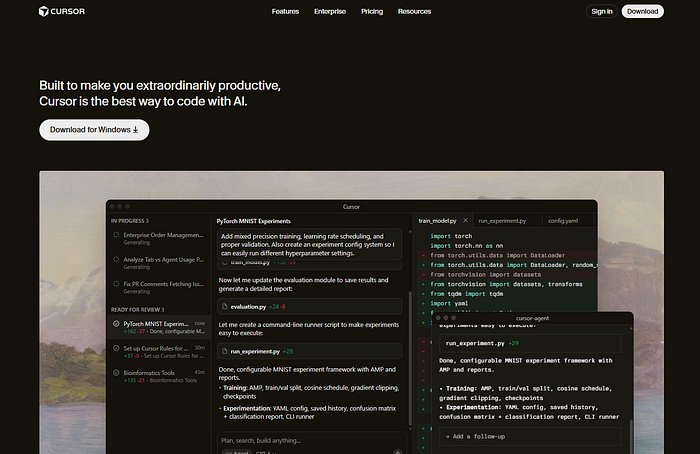
Static Figma files cannot often convey true functionality, responsiveness, or the “feel” of dynamic products.
Use AI-powered tools like v0.dev, Cursor, or Lovable to generate prototype code, or learn HTML/CSS/JS fundamentals.
Demonstrating complex AI interactions, data flow, and responsive behaviour gives you credibility that static mocks cannot.
Nielsen’s prediction of work output doubling soon is conservative. The tools already exist. The trajectory is all set.
But the choice is yours: lean into the discomfort, embrace new skills, and lead in the next era of design, or resist and watch others claim the opportunities you could have seized.
After all, AI isn’t going anywhere fast.
Secure your place in this new paradigm before the gap becomes insurmountable.
Subscribe on Substack⬇️
You might also like:
📚 Sources
- Tech times “AI Spending Hits Record Levels as Microsoft, Google, and Meta Race for Dominance”
- Exploding Topics “44 NEW Artificial Intelligence Statistics (October 2025)”
- UX Design Institute “AI & UX: A reality check with Jakob Nielsen”
- Cursor
Share this article: